

Online | July 03, 2026 | 14:00 CEST
Synthetic Societies: Human Vulnerability and Systemic Fragility in a Context of Rising Algorithmic Power
A JOINT SYMPOSIUM of EXTRA (Existential Threats and Risks to All)
and (Centre International de Recherches et Études Transdisciplinaires).
As algorithmic systems increasingly mediate social, political, economic, and cultural life, contemporary societies are becoming “synthetic” environments: infrastructures of automated decision-making, predictive analytics, generative AI, and platform governance that shape human behavior while remaining largely opaque to those they govern. This expert panel examines the growing tension between technological capability and human vulnerability in a context where algorithmic power is rapidly consolidating across institutions, markets, and everyday life.
The discussion will explore how synthetic societies produce new forms of systemic fragility, including the erosion of public trust, amplification of misinformation, concentration of economic and epistemic power, and the weakening of democratic accountability. Particular attention will be given to disparities between human cognition and machine-scale systems, as well as the psychological, social, and political vulnerabilities that emerge when automated infrastructures become embedded within critical domains such as healthcare, security, labor, education, governance, and communication.
Bringing together perspectives from technology studies, social science, political theory, law, and governance, the panel will address key questions: How do algorithmic systems reshape human agency and collective decision-making? What risks arise when synthetic systems become too complex to meaningfully audit or contest? How might societies build resilience against cascading failures, manipulation, or systemic dependency? And what forms of regulation, institutional design, and public literacy are necessary to preserve democratic and human-centered futures?
Rather than framing technological development as either utopian or catastrophic, this panel seeks to foster a critical interdisciplinary conversation about the conditions under which increasingly synthetic societies can remain socially coherent, ethically accountable, and resilient in the face of accelerating algorithmic power.
Welcome address by
Garry Jacobs
President and CEO, 91ºÚÁÏÍø of Arts and Science (USA/India)
Moderators
Prof. Dr. Thomas Reuter, Chair, EXTRA (Australia)
Prof., University of Melbourne; Trustee, 91ºÚÁÏÍø of Arts and Science (WAAS)
Thomas leads a WAAS initiative on existential risks, human security, and sustainable futures. An internationally recognized anthropologist, he is a Fellow of the European Academy of Sciences and Arts, and a former Chair of the World Council of Anthropological Associations and ExCom member of the International Science Council. His research focuses on transformative social change, sustainability, governance, climate resilience, and the role of active imagination and transdisciplinary thinking in addressing global challenges.
Florent Pasquier, President of CIRET (France)
Lead, Centre International de Recherches et Études Transdisciplinaires (CIRET); Maître de Conférences HDR en Sciences de l’Éducation et de la Formation at Sorbonne Université
A leading scholar in transdisciplinary studies, education, and social innovation, his research explores the transformation of knowledge systems, collective intelligence, participatory governance, and the role of transdisciplinarity in addressing complex societal challenges. Through his academic work and international leadership within CIRET, he promotes dialogue between science, education, culture, and public policy for sustainable and human-centred futures.
Speakers
Jerome C. Glenn (USA)Ìý
Futurist, CEO, The Millennium Project; Chair, AI Advisory Committee to the UN General Assembly
Jerome helped draft the SALT II nuclear arms treaty. Served as the executive director of the American Council for the United Nations University from 1988 to 2007, was deputy director of Partnership for Productivity International, and co-recipient of the 2022 Lifeboat Foundation Guardian Award. Author of many books, including Global Governance of the Transition to Artificial General Intelligence (2025).

Dr Mirella Tarmure Vadean (Canada)
Associate Professor, Université de l’Ontario Français, Toronto
Research on transdisciplinary analysis of the impact of artificial intelligence on human intelligence. She holds an interdisciplinary PhD in Arts and Humanities and has contributed significantly to the development of transdisciplinary thought, particularly through her work on the concepts of the transdisciplinary subject and the “boundary person” (“personne frontière”). She is actively involved in international research and educational initiatives promoting dialogue across disciplines and cultures.
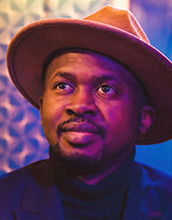
Bacely YoroBi (USA/Côte d’Ivoire)Ìý
Founder and CEO, ScortonÌý
Bacely YoroBi is a cybersecurity researcher, technology entrepreneur, international speaker, and Founder & CEO of Scorton, an AI-driven cybersecurity company focused on trust-by-design and behavioural risk prevention. He served as Head of Digital for the Ivorian Government, leading initiatives at the intersection of technology, public service, and civic engagement. A long-time advocate of open-source innovation, he was a Mozilla Representative for ten years and led Google Developer Groups (GDG) for another decade. A U.S. Department of State alumnus and TechCamp trainer, he mentored developers, entrepreneurs and digital teams for a decade, advancing cyber resilience, artificial intelligence, and responsible digital transformation.

Cristina Elena Popa Tache (Romania)
Dean, Faculty of Law and International Governance, Danubius International University; Director, CIRET Paris Observatory of Law and TransdisciplinarityÌý
Cristina is a Scientific Expert within the European Parliamentary Research Service (EPRS), 2026–2030. She is a member of the ESIL Task Force on Underrepresentation and was a Visiting Fellow at the Lauterpacht Centre for International Law, University of Cambridge. A specialist in international law, investment law, digital governance, and transdisciplinary legal studies, she has published numerous widely recognized contributions to transdisciplinary legal methodology and innovation, and to the governance of emerging technologies.

Kiriti Prasad Choudury (Bangladesh)
AI, IT, and Data Analytics Specialist,ÌýEXTRA team
Kiriti is an IT and digital governance professional with over two decades of multidisciplinary experience across industries, including advances and regulation of AI in the life sciences sector and health care. Focus on AI risk, data integrity, cybersecurity, the design of secure digital systems, and the use of data analytics for disaster resilience and early warning. Contributor to the Odysseyan Institute horizon scanning process on emerging AI risks.


